Leeuwendeel

lion’s share, bulk
[noun]
[het leeu-wen-deel, de leeu-wen-de-len] 

‘Leeuwendeel’ is composed of ‘leeuwen’ (the plural of ‘leeuw’: lion) and ‘deel’ (share). Its usage is similar to the English equivalent “lion’s share”. You will only encounter the word together with the article: ‘het leeuwendeel’. There is also a plural form but it is not commonly used.

Examples:
- “Goed, ik zal het leeuwendeel op me nemen, maar ik verwacht van jou wel maximale inzet, afgesproken?” 
(“Alright, I will take the lion’s share, but I do expect maximum commitment/effort from you, agreed?”)

- “Het leeuwendeel van de DWOTD-lezers bevindt zich in Nederland en België.” 
(“The bulk of the DWOTD readers is located in the Netherlands and Belgium.”)

- “Moeten we nog inkopen doen voor het feest?” – “Ik heb het leeuwendeel van de boodschappen al gedaan, alleen het dessert moet ik nog regelen, of heb jij daar tijd voor?” 
(“Do we still have to go shopping for the party?” – “I have already done the bulk of the shopping (/bought the bulk of the groceries), I only have the dessert left to arrange, or do you have time to take care of that?” Note that in Dutch ‘boodschappen doen’ almost always implies going to the supermarket but it can also mean ‘run a few errands’. Literally ‘inkopen doen’ translates as ‘to do purchases’.)

- “Ik heb gehoord dat je op een luxe cruise gaat! Heb je soms geld te veel?” – “Nee, de ouders van mijn vriendin zijn rijk en hebben aangeboden het leeuwendeel te betalen.” – “Zo hé, mazzelaar!” 
(“I heard you are going on a luxury cruise! Do you have too much money or what?” –  ”No, my girlfriend’s parents are rich and have offered to pay the lion’s share.” – “Wow, you lucky [insert favourite noun; note that 'mazzelaar' is positive]! .”)

- “Ik heb een verre tante die opeens uit het niets het leeuwendeel van de erfenis opeist, geloof jij dat nou? Niemand heeft ooit van dat mens gehoord!” 
(“I have a distant aunt who suddenly, out of the blue, demands the lion’s share of the inheritance, can you believe that? No one has ever heard of this woman!” Note that ‘mens’ in general means ‘human’, but it is strangely enough also used to refer to women (as in a derogatory ‘that woman’!) ).

Related words:
- Deel: part, portion, share [noun] [het deel, de delen].
- Aandeel: share, contribution [noun] [het aandeel, de aandelen].
- Merendeel: greater part, majority [noun] [het merendeel, <no plural>].
- Leeuw: lion [noun] [de leeuw, de leeuwen].
- Leeuwin: lioness [noun] [de leeuwin, de leeuwinnen].
- Welp: cub [noun] [de welp, de welpen].

Eigen schuld, dikke bult

it’s your own fault, you had it coming, serves you right
[Dutch phrase of the week]
[ei-gen schuld, dik-ke bult] 

This phrase is used teasingly and says that the person whose own fault it is should have known better, or simply had it coming.

The noun ‘bult’ probably means ‘hunch’ (as in hunchback). The ‘Van Dale Groot Uitdrukkingen woordenboek’ hints that this may date back to superstition saying that hunchbacks were to blame themselves for having a hunchback. In the meaning of ‘hunch’, we also use the word ‘bochel’ and ‘hunchback’ then becomes ‘gebochelde’ (e.g. ‘De gebochelde van de Notre Dame’).

Examples:
- “Ik ben misselijk!” – “Eigen schuld, dikke bult! Dan had je maar niet vijf haringen en drie moorkoppen moeten eten!” 
(“I am sick to my stomach!” – “That’s your own fault! (Then) You shouldn’t have eaten five herrings and three ‘moorkoppen’!” My aunt, who likes food, once ate five herrings followed by three ‘moorkoppen’ and wondered why she was sick to her stomach.)

- “O jee, ik ga mijn trein missen, nu kom ik te laat voor die vergadering! Wil jij me naar het werk brengen met de auto? Pleeeease??” – “Ja daaag! Dan had je vanochtend maar niet moeten blijven liggen; eigen schuld, dikke bult!” 
(“O dear, I’m going to miss my train, now I’ll be late for that meeting! Can you drive me to work? Pleeease??” – “No way! You had this coming! You should have gotten up this morning instead of staying in bed!” Literally: “Can you take me to work by car?…” – “Yes bye!! Then you shouldn’t have remained lying…” When begging for help or a favour we often use a prolonged and slightly higher pitched ‘pleeease’ :-) )

- “Els is bij me weggegaan, hoe moet ik nu verder?? Ik kan niet zonder haar!” – “Eigen schuld, dikke bult gozer! Je bent meerdere keren vreemdgegaan; wat verwacht je nou?!” 
(“Els left me, what do I do now?? I can’t live without her!” – “It’s your own fault man, you had it coming! You have cheated on her multiple times; what did you expect (was going to happen)?!” Lit.: “Els has left me, how must I continue?? I can’t without her!”)

Expressions:
- “Het is je eigen stomme schuld”: similar to ‘eigen schuld, dikke bult’. Lit.: ‘it is your own stupid fault’.
- “Boontje komt om zijn loontje”: serves you right!
- “Lekker puh!“: na na na na na!

Related words:
- Schuld: fault, debt, guilt [noun] [de schuld, de schulden].
- Bult: lump, hunch, hump [noun] [de bult, de bulten].

Example:
- “Ik heb mijn hoofd gestoten en nu heb ik een bult!”
(“I hit my head and now I’ve got a bump!”)

- Bochel: hunch, hump [noun] [de bochel, de bochels].
- Gebochelde: hunchback [noun] [de gebochelde, de gebochelden].

Bagagedrager

luggage carrier, (rear) rack
[noun]
[de ba-ga-ge-dra-ger, de ba-ga-ge-dra-gers] 

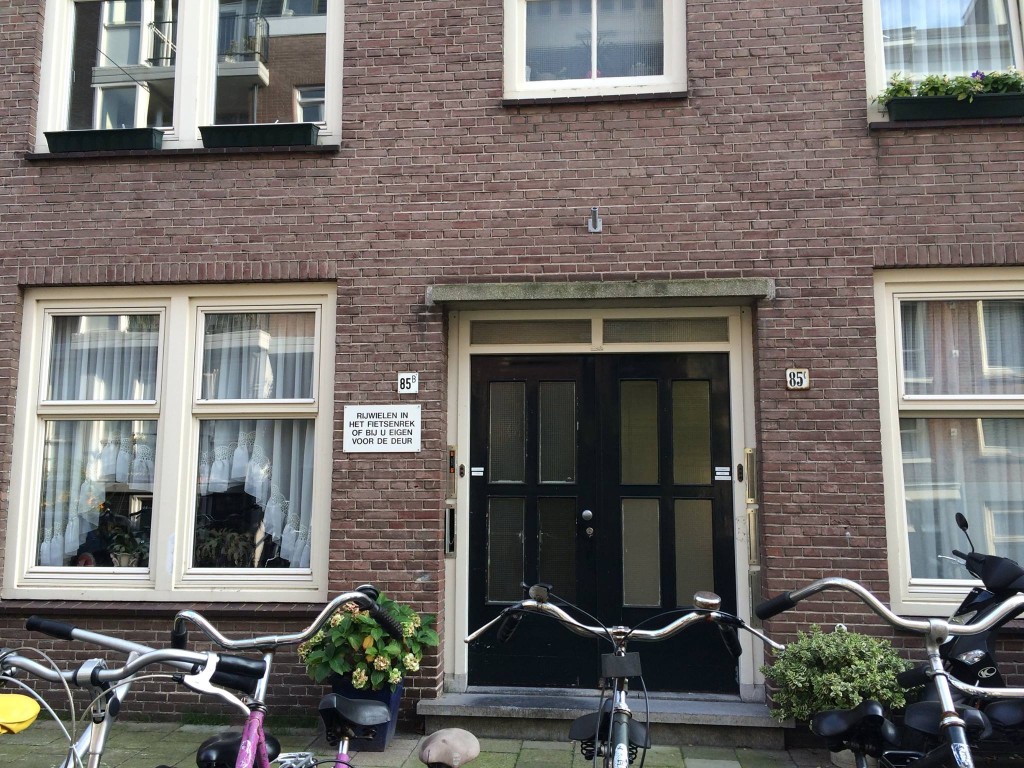
It’s part of Dutch culture to transport a friend or your partner on the rear rack of your bicycle: the ‘bagagedrager’. Although ‘bagagedrager’ in theory can mean ‘any luggage carrier’, in the Netherlands it’s almost exclusively used for bicycles. As the name implies, originally meant for luggage or whatever goods you are transporting, however in practice it is mostly used to transport another human being. In Dutch this is called: ‘iemand achterop nemen’, where ‘achterop’ means something like ‘on/at the back/rear’. When sharing a bicycle, common questions are: ‘Ga jij achterop, of ik?’, ‘Zal ik bij jou achterop gaan?’ and ‘Mag ik achterop?’. When invited you may hear ‘Kom maar achterop’ or ‘Spring maar achterop!’.

Hopping on the rear rack of a bicycle is somewhat of an art that one must master through practice. You can either sit with one leg on each side of the bicycle (only men do this), or with both legs on one side. The latter is more comfortable, but requires more ‘jumping skills’: you have to hop on while the other is cycling, otherwise it’s too difficult to ‘take off’. However, you should always jump in the direction in which the bicycle is heading, and not perpendicular to it. The latter will distort the balance of the one steering, and will also slow you down. It often helps to push with both hands holding the hips of the one steering. Many Dutch people (such as my girlfriend) still do not master this art ;-)

In recent years it has become popular to mount a ‘front rack’ on Dutch bicycles, often equipped with a crate. Although popular, some people find it a nuisance as such bicycles take up more space in the already overcrowded public bicycle stalls :-)

A popular song at the moment in the Netherlands is ‘Bagagedrager‘ by Dutch rapper Gers Pardoel (ft. Sef). You have been introduced to Gers Pardoel in DWOTD Animatie. This is the second hit of his debut album ‘Deze wereld is van jou’ (‘This world is yours’). I have chosen this song because of its seeming paradox: tough rappers use rough language to rap about giving girls a ride on their bicycle. The song lyrics are also informative due to the occurrence of typical Dutch phenomena, such as obviously the ‘bagagedrager’, but also Dutch bicycle brand ‘Gazelle‘, buying a bicycle for 10 euros (or guilders for those old enough) from a junkie, and the Dutch yogurt drink ‘Fristi‘.

It took me some time to figure out the lyrics, so don’t feel demotivated if you can’t immediately understand what’s being said :-)

Lyrics

[Sef:] Spring maar achterop bij mij, achterop m’n fiets
(Come hop on behind me, behind me on my bicycle [note that 'maar' is used here to create a 'friendlier' imperative, usually translated with '(please) do...' or 'come (on and) ...'. Literally this sentence translates as 'hop on the back with me, on the back of my bicycle'. The use of "m'n" is colloquial for 'mijn'.] )

En ik weet nog niet waar we naartoe gaan samen, maar dat boeit me ook helemaal niets
(And I do not know yet where we will go together, but I couldn’t care less [note the use of the verb 'boeien': to captivate, fascinate. When something 'boeit je/jou' it means that you are very interested by or in that something.)

En spring maar achterop bij mij, dan gaan we samen weg
(And do hop on behind me, and we will leave/depart together)

En ik weet nog niet waar naartoe maar dat maakt niet uit want ik weet wel de weg
(And I don't know yet which way (lit. 'to where') but that doesn't matter because I know the way)

[Gers:] Uh, ik ken je nog nie maar je lijkt op Barbie en het zou kunnen liggen aan die vijf Bacardi
(Uh, I don’t know you yet but you look like Barbie and that could be caused by those five Bacardis [note that 'nie' is colloquial for 'niet'. The verb 'liggen aan' means: to be caused by, to find its cause in, to have to do with. The Dutch version of "it's not you, it's me" is 'het ligt niet aan jou, het ligt aan mij'.] )

Maar ik denk dat het ligt aan je mooie face, aan die mooie en o zo grote reet
(But I think it is because of your beautiful face, because of that beautiful and very big ass [I think 'face' is only used here to establish assonance with 'reet'] )

En ik hoop dat je past op m’n bagagedrager, want ik heb een nieuwe fiets ik ben een ragemaker
(And I hope you (will) fit on my rack, because I have a new bicycle and I’m a hype creator [I think 'ragemaker' is an invented word. Nothing to with rage; the Dutch word for hype is 'rage'] )

En ik zet die trend, ik skip die trend, dus spring maar op bij mij die fiets dan kunnen we naar huis toe samen
(And I set that trend, I skip that trend, so hop on behind me on my bicycle, then we can go home together [note that 'spring maar op bij mij die fiets' is grammatically incorrect] )

En onderweg vertelde ik wat je van mij wil horen, je zat aan de bar en je wilde scoren
(And on the way I told you what you want to hear from me, you were sitting at the bar and was looking to score [actually I hear Gers sing 'je zag aan de bar' ('you saw at the bar') but that doesn't make any sense] )

Ik ben gevallen voor je ogen en je sexy stijl, je lijkt de vrouwelijke Gersie wel
(I fell for your eyes and your sexy style, (my) you look like the female ‘Gersie’ [note that the diminutive of 'Gers' is 'Gersje', and 'Gersie' is the informal diminutive] )

En de volgende morgen (het) was niet te geloven, die chick die was weg en had me voorgelogen
(And the next morning; unbelievable, that chick was gone and had lied to me ['voorliegen' differs from 'liegen' in that the first implies that the person lied about what was to come] )

En ik had d’r nog wel zo lekker genomen, maar eindstand: had ze m’n fiets gestolen!
( (And all that) while I had her so good, but final score: turns out she stole my bicycle! [note that "d'r" is colloquial for 'haar'. When a man says (the derogatory) 'ik heb haar genomen', it means that he 'had her' (or 'had his way with her').] )

[Sef:] Spring maar achterop bij mij, achterop m’n fiets
En ik weet nog niet waar we naartoe gaan samen, maar dat boeit me ook helemaal niets
En spring maar achterop bij mij, dan gaan we samen weg
En ik weet nog niet waar naartoe maar dat maakt niet uit want ik weet wel de weg

[Gers:] Uh, ik ken je nog nie maar je lijkt op Nikki en het zou kunnen liggen aan die vijftien whisky
(Uh, I don’t know you yet but you look like Nikki and that could be caused by those fifteen whiskies)

Je kleding is roze met blauw; als Fristi, en je heupen zijn sexy in die strakke skinny
(Your clothing is pink with blue; like Fristi, and your hips are sexy in that (/those) tight skinny (jeans) )

Misschien is het een idee om hier weg te gaan, naar een plek ergens hier ver vandaan
(Perhaps it’s an idea to depart from here (/leave this place), to a place somewhere far from here)

Naar Parijs of naar Rome, of naar Milaan, of als E.T. op een fiets helemaal naar de maan
(To Paris or Rome, or to Milan, or like E.T. on a bicycle all the way to the moon)

Onderweg vertel ik jou wat je niet wil horen, want dat is wie ik door de jaren heen ben geworden
(On the way I tell you what you don’t want to hear, because that’s who I’ve become over the years)

Nu ben ik oprecht en heb het beste voor je, het beste met je voor is soms slecht te verwoorden
(Now I’m sincere and have the best for you, ‘(wanting) the best for you’ is sometimes hard to put into words [note the expression 'het beste met iemand voor hebben': to want the best for somebody] )

Als ik maar met je kan zijn, de rest kan me niet schelen
(As long as I can be with you, I don’t care about the rest)

Zij waren nep en ze wilden me breken
(They were fake (/lame/stupid) and they wanted to break me)

En jij past precies op m’n bagagedrager en dat is dus wel gebleken
(And you fit exactly on my rear rack and that certainly turned out to be the case)

[Sef:] Spring maar achterop bij mij, achterop m’n fiets
En ik weet nog niet waar we naartoe gaan samen, maar dat boeit me ook helemaal niets
En spring maar achterop bij mij, dan gaan we samen weg
En ik weet nog niet waar naartoe maar dat maakt niet uit want ik weet wel de weg

[Sef:] Vanavond een donnie uitgegeven, de best bestede donnie van m’n leven
(Tonight I spent a ‘donnie’, the best spent ‘donnie’ of my life ['donnie' is slang for 10 euros (used to be 10 guilders)] )

Want als ik die junk geen money had gegeven, dan kon je nu niet achterop (dan kon je nu niet achterop); ah
(Because if I hadn’t given that junk money, then you wouldn’t have been able to hop on behind me (then you wouldn’t have been able to hop on behind me); ah)

Ik zag je staan met je hoge hakken, rooie lakken, zo sexy, zo’n klasse
(I saw you (standing) there with your high heels, red lacquer, so sexy, such class [normally we wouldn't use the plural form of 'lak'; 'rooie' is colloquial for 'rode'] )

Enne, werd verblind door je oorbellen, sorry: vergeet mezelf helemaal voor te stellen
(And…, got blinded by your earrings, (I’m) sorry: completely forget to introduce myself)

Mijn naam is Sef, mag ik nu iets in je oor vertellen: ik vind je sexy, geheimpje, niet doorvertellen
(My name is Sef, now may I tell you something in your ear: I think you’re sexy, (ssht) secret, don’t tell anyone [literally: don't tell further] )

Nee ik pest je, meisje, begrijp je wel hè, ik heb een plekje vrij op mijn Gazelle
(Nah I’m teasing you (/messing with you), girl, you understand don’t you, I have a free spot for you on my Gazelle ['Gazelle' is a well-known Dutch bicycle brand] )

We kunnen fietsen, flesje wijn bestellen, of dansen, ikweenie, lijkt mij gezellig
(We could go cycling, order a bottle of wine, or go dancing, dunno, seems like fun to me ['ikweenie' is colloquial for 'ik weet niet'] )

Maar beter zeg ik niks, dus spring maar achterop, dan krijg je van mij een lift
(But it’s better to say nothing, so hop on behind me, and I’ll give you a ride [note that 'maar beter zeg ik niks' should really be: 'Maar het is beter als ik niks zeg'] )

[Sef:] Spring maar achterop bij mij, achterop m’n fiets
En ik weet nog niet waar we naartoe gaan samen, maar dat boeit me ook helemaal niets
En spring maar achterop bij mij, dan gaan we samen weg
En ik weet nog niet waar naartoe maar dat maakt niet uit want ik weet wel de weg

Vers van de pers

hot off the press, just announced/published
[Dutch phrase of the week]
[vers van de pers] 

When a book, newspaper or any physical publication has just been released, we say it is ‘vers van de pers’: hot off the press. The phrase is popular due to the rhyme. The adjective ‘vers’ translates as ‘fresh’. Sometimes the phrase is also used to indicate that something has just been announced (or a bit of news has just been released).

Examples:
- “Heb jij het nieuwe boek van Arnon Grunberg nu al gelezen?” – “Ja, ik heb hem meteen gekocht toen die uitkwam; vers van de pers!” 
(“Have you already finished reading Arnon Grunberg’s latest book?” – “Yes, I bought it immediately after it was published; hot off the press!”)

- “Ik lees de krant tegenwoordig op mijn iPad. Hij is dus nooit meer echt ‘vers van de pers’ maar ik verbruik zo wel minder papier!” 
(“I read the newspaper on my iPad these days. So it’s never really ‘hot off the press’ but I do use up less paper this way!”)

- “Wat hoor ik nu, zijn de rayonhoofden bijeengekomen?? Wanneer?” – “Zonet! Het is zojuist bekendgemaakt; vers van de pers!” 
(“What have I heard, have the ‘rayonhoofden’ assembled?? When?” – “Just now! It was announced just a minute ago!” This example refers to the ‘Elfstedentocht‘ fever that’s currently spreading in the Netherlands. This ice skating race passes through several regions in the province of ‘Friesland‘, so-called ‘rayons’, and when the heads of the ‘rayons’ meet, it’s a serious indication that the race may in fact take place. The last ‘Elfstedentocht’ (11 cities tour) was held in 1997.)

- “Ik heb een leuk nieuwtje, vers van de pers, wil je het horen?” – “Ja graag! Ik kan wel wat afleiding gebruiken…” 
(“I’ve got a fun bit of news, just heard it, do you want to hear it?” – “Yes please! I could certainly use some distraction…”)

- “Geef mij maar een echte ochtendkrant, er gaat niets boven ontbijten met een krant die vers van de pers is!” 
(“I definitely prefer a real morning paper, nothing beats having breakfast with a newspaper (that’s) hot off the press!” Lit. “(just) Give me a real…, there goes nothing above…” The Dutch noun for ‘breakfast’ is ‘ontbijt‘.)

Expressions:
- “Het verspreidt zich als een lopend vuurtje”: it’s spreading very fast (of news).

Example:
- “Twee uur geleden was het nog vers van de pers, maar nu verspreidt het bericht zich als een lopend vuurtje en weet iedereen ervan!”
(“Two hours ago it was ‘hot off the press’, but by now the news is spreading fast and everybody knows about it!”).

Related words:
- Vers: fresh, new [adjective].
- Pers: press (equipment), press (the media) [noun] [de pers, de persen]. The plural ‘persen’ only applies to the press equipment. In case of ‘press (the media)’ we always use the article, i.e. ‘de pers’.
- Persen: to press, compress, push, squeeze [verb] [perste, geperst]. ‘Persen’ in the translation of ‘to push’ is used when delivering a baby.
- Drukken: to print (of publication) [verb] [drukte, gedrukt].

Daar kun je donder op zeggen

you can be sure of that, you can bet your life on that
[Dutch phrase of the week]
[daar kun je don-der op zeg-gen] 

‘Donder’ is the Dutch noun for ‘thunder’. It is often used as an expletive and today’s phrase is an example of that. It’s however a perfectly normal expression to use, although probably not in formal communication. You can use this expression when you are sure something will happen. Often it implies you are expecting it based on previous experience.

You can also use the expression in the form: “Je kunt er donder op zeggen dat [...]“, see the Examples below.

Examples:
- “Als je één klant korting geeft, willen ze allemaal korting; daar kun je donder op zeggen!” 
(“If you give one customer a discount, they all want a discount; you can be sure of that!”)

- “Je kunt er donder op zeggen dat als het een paar dagen vriest, er weer over een Elfstedentocht gesproken wordt!” 
(“You can bet your life that when we’ve had a few days of frost, they start talking about an Elfstedentocht again!” Lit.:”…that when it’s freezing for a few days, …” Whenever there are a few consecutive days of frost in winter, the Dutch media start speculating on a potential Elfstedentocht, the last of which was held in 1997.)

- “Mijn handbagage is gestolen tijdens het inchecken op Schiphol!” – “Ja, daar kun je donder op zeggen; het is druk, je bent gehaast en gestresst, en dan let je dus niet goed op!” 
(“My hand luggage was stolen during check-in at Schiphol!” – “Yep, that is to be expected; it’s crowded, you are in a hurry and you’re stressed, and that’s when you don’t pay attention properly!” Note the expression ‘binnen de kortste keren’: in no time (at all).)

- “Ik was maar 5 minuten weg, kom ik terug bij de auto, heb ik een bon!” – “Daar kun je donder op zeggen, ze controleren in Utrecht aan de lopende band.” 
(“I had only been away for 5 minutes, and when I returned to the car there was a parking ticket waiting for me!” – “That’s bound to happen, they monitor parked cars continuously in Utrecht!”)

- “Je kunt er donder op zeggen dat het met een onervaren leraar voor de klas binnen de kortste keren een beestenboel wordt!” 
(“There’s bound to be instant chaos with an unexperienced teacher in the classroom.” Lit.:”… that with an unexperienced teacher in front of the class it will become a hell of a mess in no time!”)

Expressions:
- “Zeer zeker”: most certainly.
- “Zeker weten!”: definitely / for sure!. Lit. “to know for sure.”

Example:
- “Ga je voetbal kijken vanavond?” – “Zeker weten man, ik wil het voor geen goud missen!”
(“Are you going to watch football/soccer tonight?” – “Definitely man, I wouldn’t want to miss it for the world!” Lit.:”I want to miss it for no gold!”)

Related words:
- Donder: thunder [noun] [de donder, de donders].
- Donderdag: Thursday [noun] [de donderdag, de donderdagen]. Note that we speak of ‘Day of thunder’ as opposed to “Thor‘s Day”.
- Zeker: certain, sure [adjective/adverb].
- Geheid: certain, sure [adjective/adverb].
- Verwacht: expected [adjective/adverb].